The Intimate Scale of Vision: Eugene Kingman's World in Prints and Drawings
Kingman's etchings, lithographs and early pen and ink drawings, shown at the Roberta & Bob Rogers Gallery, reveal an artist working at a scale meant to be held and studied up close.
Before Eugene Kingman became known for his monumental New York Times mural or his transformative leadership at the Joslyn Art Museum, he was a young artist at Yale, sketching the world around him with pen and ink for the Yale Record. These early works reveal something essential about Kingman’s artistic philosophy: that art should never be isolated from everyday living experience.
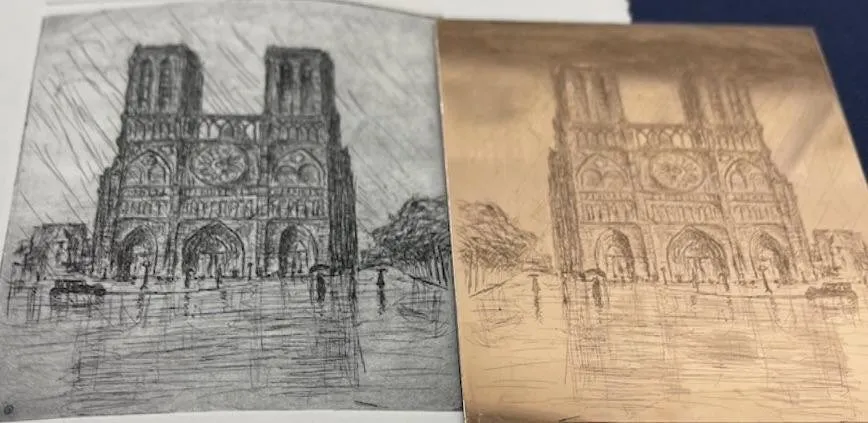
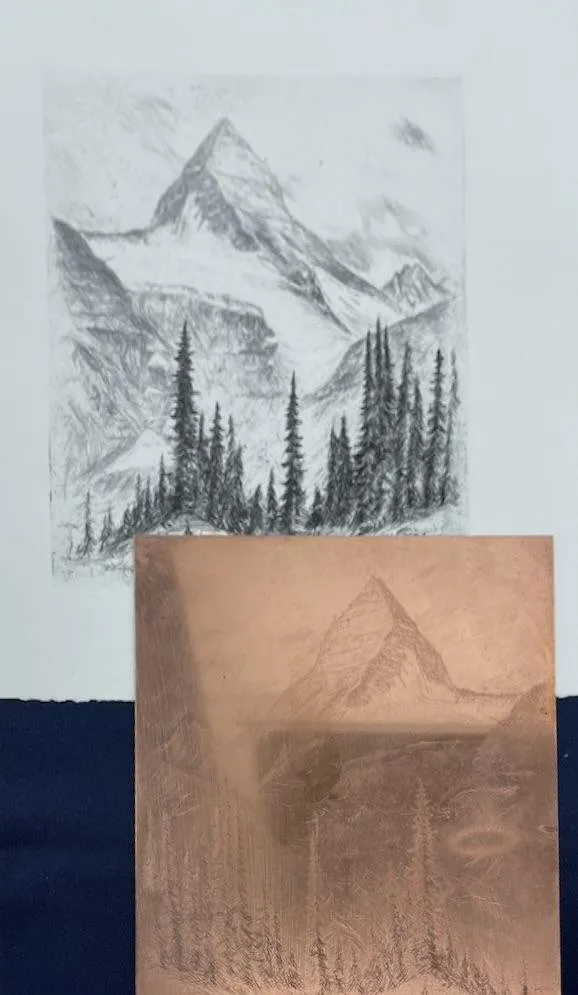
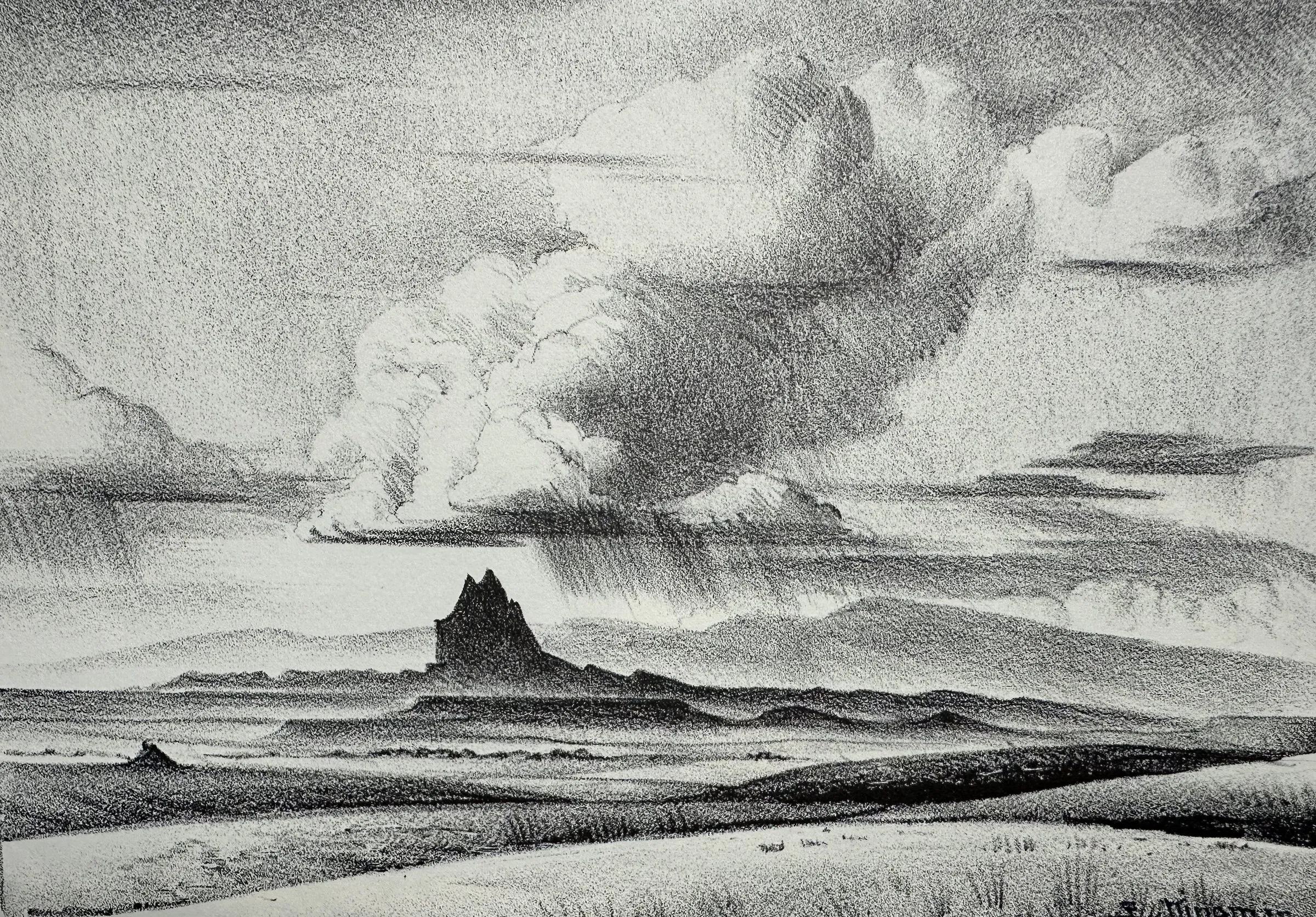
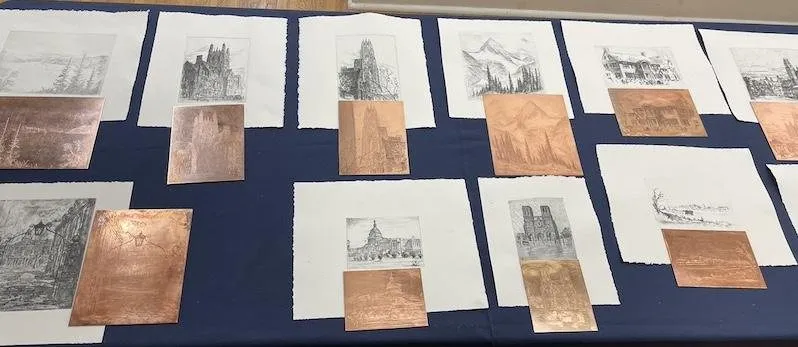
The collection of etchings, lithographs, and drawings currently on display at the Roberta & Bob Rogers Gallery offers a rare glimpse into the intimate creative process of an artist better known for grand public works. Here, in copper plates etched with cathedrals and capital buildings, in lithographic landscapes of Ozark farms, and in pen and ink sketches from his university days, we see Kingman working at a scale that invites close examination and personal connection.
His etchings are particularly revelatory. Mountains rise from forests of carefully rendered pines. Notre Dame’s Gothic towers catch light and shadow through networks of precise line work. Farm buildings nestle into landscapes where every furrow and fence post speaks to direct observation. These are not abstractions or romantic idealizations but records of places seen and deeply felt by an artist who believed that “the ability to create is part of being human.”
The Yale Record drawings show us Kingman as a young observer, already developing the keen eye for architectural detail and human scale that would define his later career. From these college sketches to his sophisticated etchings of European landmarks and American farms, we trace an artist’s journey from student to master, from recorder to interpreter.
“These plates represent my grandfather’s commitment to making art accessible and experiential,” reflects Quinlan Kingman Eddy, director of the Eugene Kingman Collection LLC. “He didn’t just want people to look at art on a wall. He wanted them to understand the process, to feel the connection between hand, tool, and image. That’s why it’s so meaningful to have these original copper plates available for workshops where people can actually print from them.”
The connection between Kingman and the natural world runs deep through his work. “My father had a profound love for trees and the natural landscape,” notes Mixie Kingman Eddy. “Whether he was painting national parks or etching a simple grove of pines, you can see his reverence for nature in every line. He believed that understanding the earth, whether as a geologist or an artist, meant paying attention to the smallest details of the world around us.”
The technical mastery evident in these works is undeniable, yet the plates themselves tell another story. Time and handling have left their marks, scratches that accumulate on copper surfaces and transfer to every impression pulled from them. Rather than diminishing these works, these imperfections speak to their use and circulation, to an artist who valued accessibility over preciousness.
“What strikes me most about Eugene’s prints and drawings is their democratic spirit,” observes John Rogers of the Roberta & Bob Rogers Gallery. “Here’s an artist who could paint monumental murals for the New York Times and design exhibitions for the Smithsonian, but he never lost touch with the intimate scale of printmaking. These etchings were meant to be held, studied up close, maybe even printed by other hands. That generosity of spirit runs through everything he created.”
From his dual degrees in Geology and Fine Arts at Yale to his leadership at major museums, Kingman brought a scientist’s precision and a humanist’s warmth to everything he touched. In these prints and drawings, we see both qualities at work: the careful observation, the technical rigor, and underneath it all, the fundamental belief that art belongs in everyday life.
A select number of the copper plates and prints were on display at the Roberta & Bob Rogers Gallery from November 14, 2025 to January 10, 2026, where visitors could examine the incised lines, feel the dimensionality of the etched surface, and understand viscerally how ink settles into grooves to create an image. Hands-on printmaking workshops can be scheduled directly with the gallery, offering participants the opportunity to select a plate, learn to ink and wipe it, and pull their own impression to take home.
To see more of Kingman’s works and artifacts, visit the Eugene Kingman Room at Joslyn Castle and Gardens in Omaha, NE, where a permanent collection celebrates his extraordinary career and contributions to American art.
This is exactly what Kingman would have wanted: art not as artifact but as living practice, technique not as mystery but as learnable skill, and beauty not isolated on museum walls but integrated into the texture of everyday experience.
Photographs